Bahamian Rum Punch And Goombay Smash Explained
Bahamian rum punch and the Goombay Smash are the two cocktails visitors most often meet first in Nassau, and they are different animals: one is a ratio, the other a guarded family recipe from a small cay.
Short answer
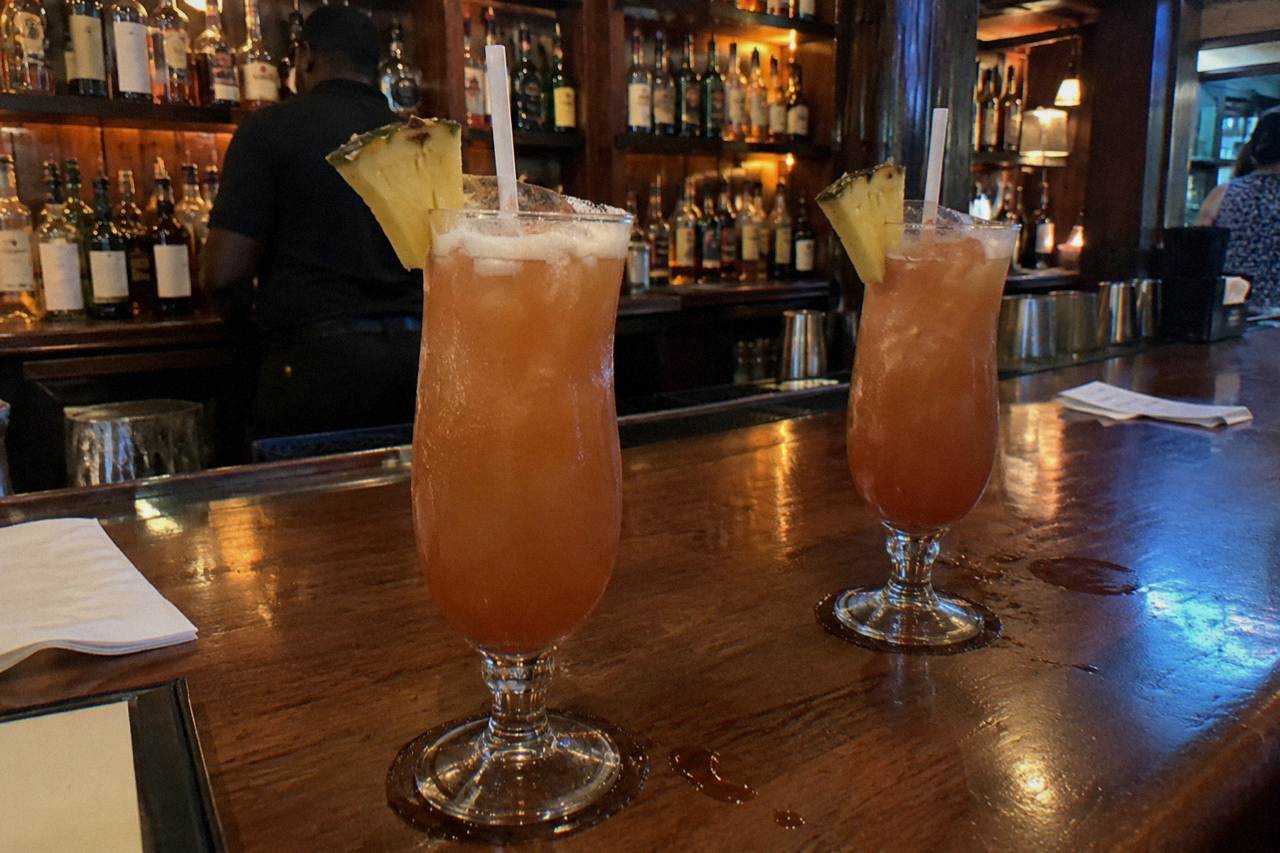
Rum punch follows the Caribbean ratio of one sour, two sweet, three strong, four weak, garnished with nutmeg. The Goombay Smash was created in the 1960s by Emily Cooper at Miss Emily's Blue Bee Bar on Green Turtle Cay, and the exact recipe stays a family secret. In Nassau you can taste rum punch on rum tours from $73 per person and a version of the Goombay Smash at Curly's at Arawak Cay.
Two drinks anchor the Bahamian cocktail scene, and many visitors meet them on their first afternoon ashore at Prince George Wharf. One is Bahamian rum punch, a drink built on a memorable ratio that bartenders across the Caribbean share. The other is the Goombay Smash, a pineapple-forward cocktail whose exact recipe belongs to one family on a small Out Island cay. Nassau serves versions of both, and knowing the difference changes what you order.
This guide lays out what actually goes into each drink, who claims ownership of them, and where to try them on a tour.
What Is Bahamian Rum Punch Made Of?
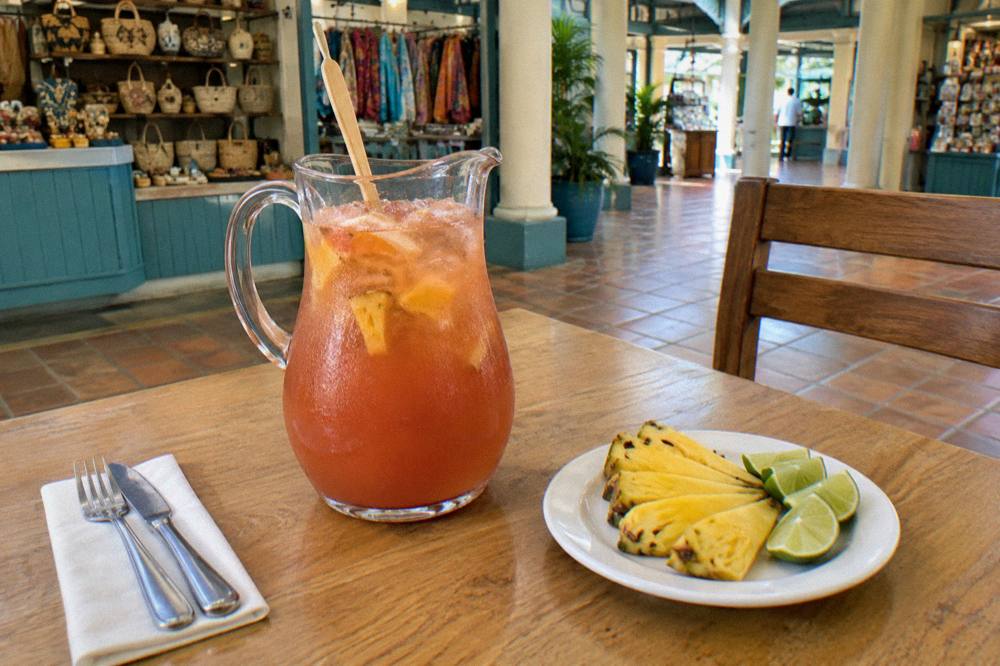
Bahamian rum punch is built on the classic Caribbean ratio of one part sour, two parts sweet, three parts strong and four parts weak. The sour is fresh lime or lemon juice, the sweet is syrup or grenadine, the strong is Bahamian rum, and the weak is water, ice or a soft juice, finished with a grating of nutmeg.
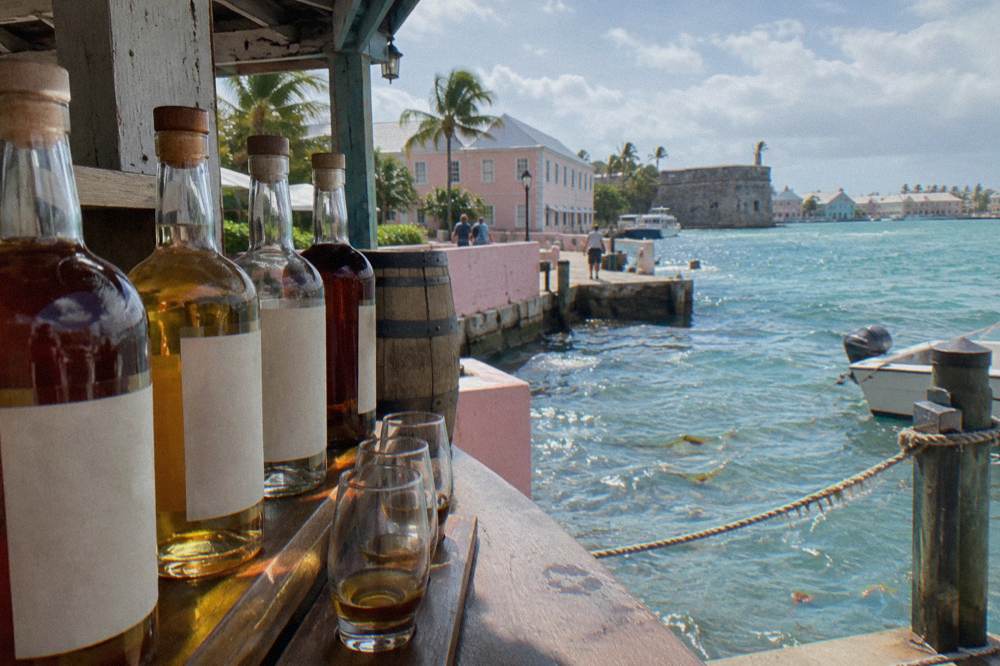
The one-two-three-four formula is an island-wide inheritance rather than a Nassau invention, and Bahamian versions lean on locally distilled rum, which is where John Watling's comes in. The distillery's estate rums, Pale, Amber and the older expressions, are small-batch, molasses-based and hand-blended, and the distillery's own tavern pours signature cocktails built on them. A rum punch made with a three-year aged amber tastes noticeably rounder than one built on a pale, which is a useful thing to know before you order.
The nutmeg garnish is not decoration for its own sake. It is the aromatic signature of the drink across the Bahamas, and it shows up again in Sky Juice, the gin, coconut water and condensed milk mix you will find at the Arawak Cay Fish Fry. Order a rum punch anywhere from Bay Street to a beach bar on the western shore and the nutmeg is the detail that tells you the person behind the stick has made one before.
| Rum punch element | Typical Bahamian ingredient | What it does |
|---|---|---|
| One part sour | Fresh lime or lemon juice | Sharpens and balances the sweetness |
| Two parts sweet | Simple syrup or grenadine | Rounds the acidity, adds color |
| Three parts strong | Bahamian rum, often John Watling's Pale or Amber | The backbone of the drink |
| Four parts weak | Water, ice, or pineapple and citrus juice | Dilutes and stretches the serve |
| Finish | Freshly grated nutmeg | The aromatic signature of the Bahamian serve |
If you want to go deeper on the spirits themselves rather than the mixed drinks, our guide to rum tasting in Nassau covers what a guided tasting actually includes.
Where Did The Goombay Smash Come From?
The Goombay Smash was created in the 1960s by Emily Cooper, known as Miss Emily, at her Blue Bee Bar on Green Turtle Cay in the Abacos, and the exact recipe remains a family secret guarded today by her granddaughter Phylicia Smith. Confirmed elements include coconut rum and pineapple juice. Miss Emily herself was a non-drinker who was allergic to pineapple and never tasted her own famous cocktail.
That origin story is documented by Food & Wine in a piece tracing the drink's history, and it matters for what you order in Nassau. A Goombay Smash on Bay Street is a version, not the original, because the original lives on a small cay that is a ferry ride from the main Abaco settlements. The family has never published the full recipe, so every bar in Nassau, including the distillery taverns and the Fish Fry shacks, works from an interpretation.
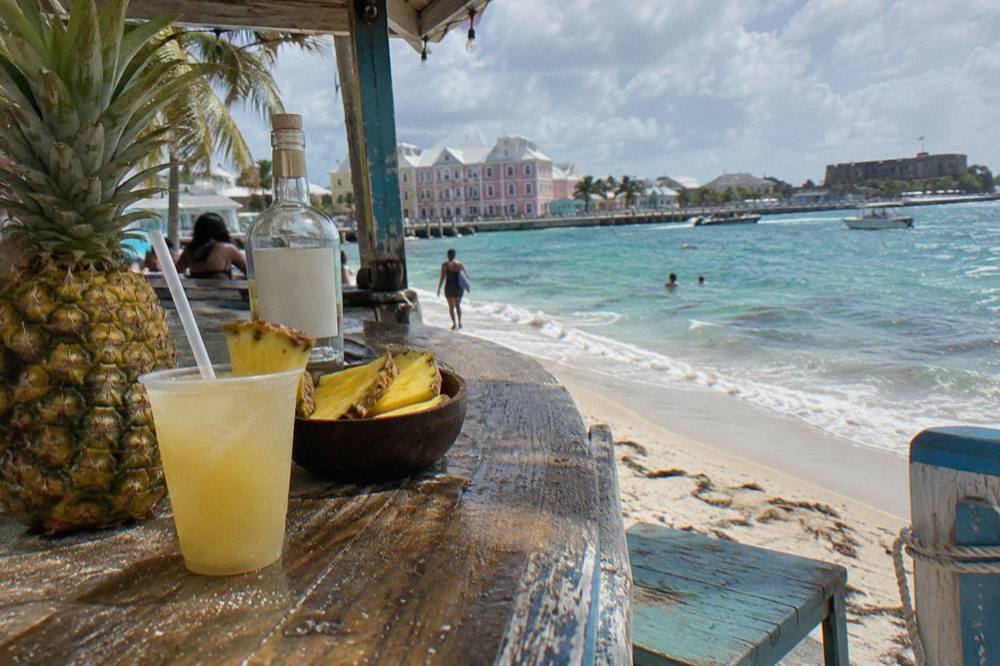
A version of the Goombay Smash is served at Curly's at Arawak Cay in Nassau, which is the closest most visitors get to the drink without flying to Abaco. The Fish Fry strip itself is an artificial extension created in 1969 from sand dredged during harbor work, and it is now the default place in the capital for conch salad, cracked conch and Sky Juice alongside the cocktails.
The name comes from goombay, a Bahamian rhythm and the goatskin drum that drives it, so the drink carries a slice of national culture in its title even when the pour in front of you is a loose interpretation. Ask a bartender what is in their version and you will usually get coconut rum and pineapple juice, sometimes a second rum, sometimes a splash of citrus. The proportions are where the family secret lives.
Rum Punch Or Goombay Smash: Which Should You Order?
Order a rum punch when you want a reliable, balanced serve built on local rum, because the ratio keeps every competent bartender close to the same drink. Order a Goombay Smash when you want the sweeter, pineapple and coconut route and the story that comes with it, accepting that quality varies more widely since the original recipe is secret. Both are legitimately Bahamian, but only one of them is a codified formula you can learn in a class.
That difference in consistency is the practical point. Rum punch has a published ratio, which is why you can reproduce it at home after one lesson. The Goombay Smash is folklore in a glass, and part of its appeal is that no two Nassau versions taste identical.
The Goombay Smash is also the sweeter of the two by most accounts, which makes it a dividing line for drinkers. If you like tiki-adjacent pineapple drinks, it lands well in island heat. If you prefer your rum forward and your sugar restrained, the punch, with its citrus spine and nutmeg finish, is the safer order.
| Bahamian rum punch | Goombay Smash | |
|---|---|---|
| Origin | Caribbean-wide ratio, Bahamian execution | Miss Emily's Blue Bee Bar, Green Turtle Cay, 1960s |
| Recipe status | Published ratio, one sour, two sweet, three strong, four weak | Family secret, guarded by granddaughter Phylicia Smith |
| Core flavors | Rum, citrus, nutmeg | Coconut rum, pineapple juice |
| Consistency in Nassau | High, the ratio disciplines the pour | Variable, every bar interprets it |
| Easy to make at home | Yes, follow the ratio | Only as an approximation |
| Best for | Rum-forward drinkers | Sweet, tropical cocktail fans |
Where Can You Taste Both In Nassau?
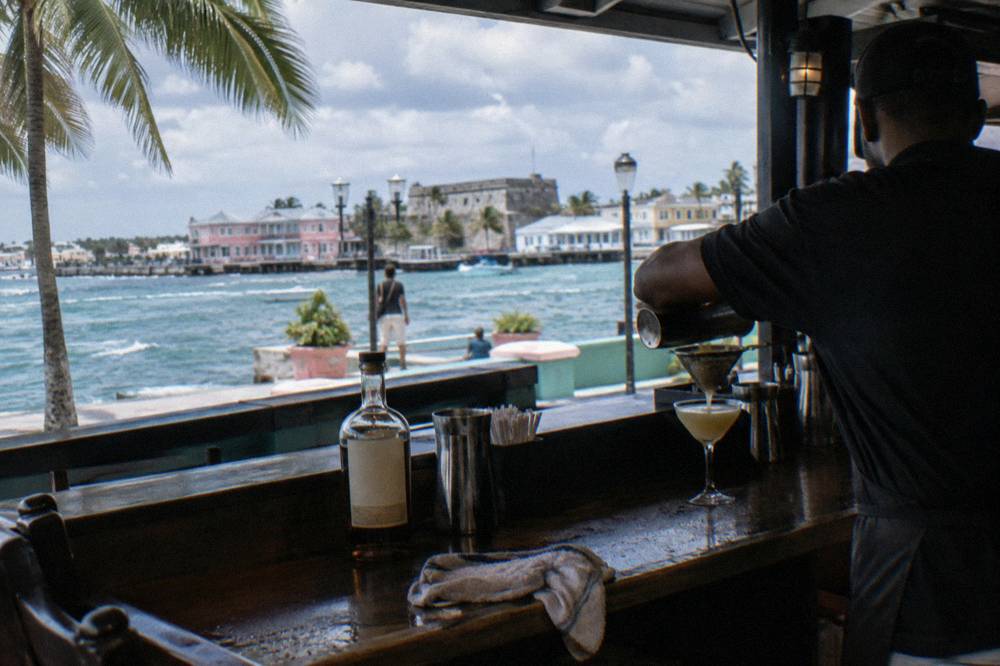
A guided tour is your best bet for tasting rum in several forms in one outing: the Rum Tasting and Food Walking Tour (4.9 from 1,180 reviews, from $98) serves three cocktails plus five rum tastings and pairs them with conch fritters and rum cake. Off tour, try John Watling's tavern or the Arawak Cay Fish Fry.
The walking tour category is where the drinks meet the food. The Rum Tasting and Food Walking Tour starts at John Watling's Distillery on the Buena Vista Estate, runs three hours, carries a listing minimum age of 18, and caps groups at 12, and its inclusions list five rum tastings, three cocktails, a mixology session and locally infused appetizers. Guests meet at the distillery rather than being picked up, which suits anyone already downtown near the port.
If your day runs more toward music than mixology, the reggae tour family pours the other signature Bahamian serve: rum punch. The Rum Reggae and Rhythms Tour, 4.6 from 691 reviews, from $73 per person, lists the operator's rum punch and reggae music over four hours, departing Parliament Square on Bay Street. Our guide to the rum and reggae tours breaks down every listing in that family.
Which Mixology Class Teaches These Cocktails?
John Watling's mixology class, from $80 per person for 45 minutes, lists three crafted cocktails and a completion certificate, and the distillery sells it as two listings with the same format, so both are candidates. The Private Spirits Tasting and Mixology at a downtown speakeasy, rated 5 from 48 reviews, from $35, teaches cocktail crafting with a three-rum flight and Prohibition tales.
The class you choose shapes what you walk away able to build. The John Watling's classes sit inside the distillery experience itself, so you learn with the estate's own rums in hand, and the distillery's own visit page lists a mixology class at $80 alongside a rum tasting at the same price and the $20 bottle-your-own experience. You can compare the full ladder of paid experiences in our John Watling's experiences comparison.
The speakeasy option is a different flavor of evening. It meets on Bay Street in downtown Nassau, runs 45 minutes privately for up to 12 guests, and pairs the cocktail crafting with a guided look at a speakeasy and Prohibition-era stories, which is a natural fit given Nassau's own rum-running history.
| Class or experience | Price | Length | Rating | Format |
|---|---|---|---|---|
| Bahamian Mixology Experience at John Watling's | from $80 per person | 45 minutes | too few reviews for a star claim | shared, up to 20 guests |
| Hands On Mixology Class at John Watling's | from $80 per person | 45 minutes | too few reviews for a star claim | shared |
| Private Spirits Tasting and Mixology, downtown speakeasy | from $35 per person | 45 minutes | 5 from 48 reviews | private, up to 12 guests |
| Rum Cocktail and Conch Fritter Class, 8-rum tasting | from $90 per person | 2 hours | too few reviews for a star claim | shared |
Can Cruise Passengers Fit These Cocktails Into A Port Day?
Yes, easily, because the cocktail experiences cluster within walking or short taxi distance of Prince George Wharf. John Watling's is a 10 to 15 minute walk from the terminal per the distillery's directions page, about five minutes by taxi for around $8 to $10, and the 45-minute classes fit comfortably inside even a half-day call. The four-hour reggae tours and the three-hour walking tour suit fuller port days.
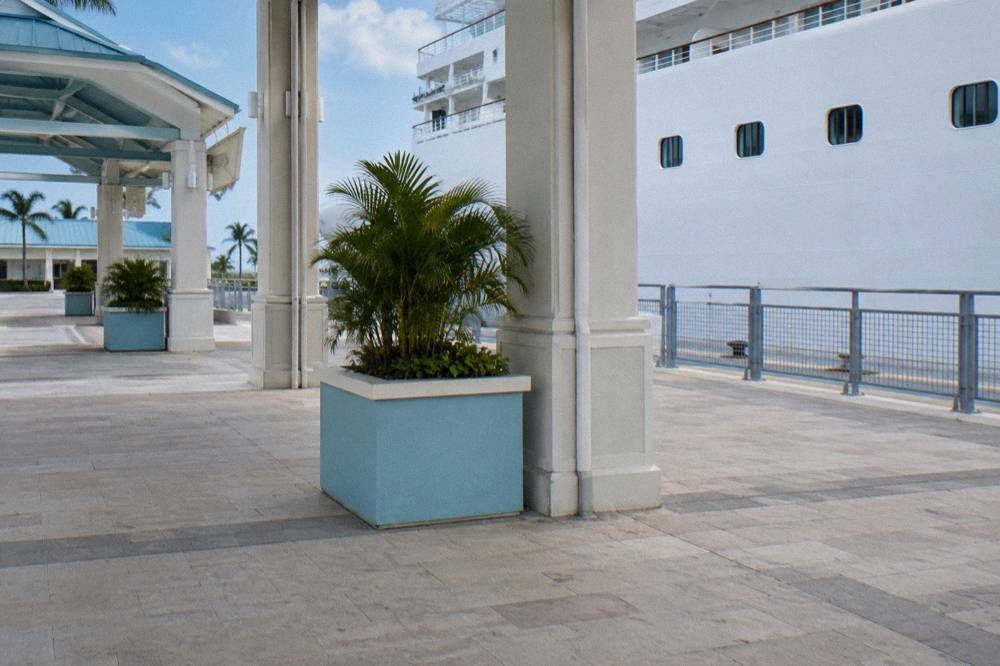
Timing is the whole game on a ship day. Typical calls run from morning arrival to late afternoon departure, and the 45-minute formats at John Watling's or the downtown speakeasy leave room for the Straw Market, Fort Fincastle or a beach stop afterward. The walking tour starts at the distillery, so factor in the uphill walk or the taxi fare. Our guide to fitting a rum tour into a Nassau cruise stop handles the full scheduling math.
One planning note belongs here and nowhere else in this article: if you buy a bottle of rum to carry back to the ship, cruise line policy, not Bahamian law, is what decides your evening. Royal Caribbean's published policy holds that beer and hard liquor cannot be brought on board and that port purchases are stored and returned at the end of the voyage. Other lines differ, so check your own line before you buy.
Decide the walk versus taxi question before you disembark. The 10 to 15 minute stroll to the distillery is pleasant enough on the way out, but if you have booked the walking tour, remember that it also starts at the distillery, so the uphill approach or the taxi fare comes on top of the tour itself, not instead of it. A taxi out and a walk back, or the reverse, splits the difference and keeps the day flexible.
What Should You Know Before Your First Rum Punch In Nassau?
The legal drinking age in the Bahamas is 18, and each tour and venue sets its own minimum above that where the listing says so. Upscale venues sometimes enforce 21 and up, so carry ID. Public intoxication is an offence, so drink at licensed venues and check local signage before carrying a drink outside.
Several Nassau rum tours carry a listing minimum age of 18, including the food and rum walking tour and the Graycliff cigar and rum tasting. Where a listing says to check, ask the operator before booking, because operators set their own floors. Cruise passengers should also remember that ships commonly apply 21 on board regardless of Bahamian shore rules, which is a trap for younger adults who drank legally on land.
Tipping rounds out the practical picture. Restaurant norms in Nassau run 15 to 20 percent, with many bills adding a service charge automatically, and cash tips in US dollars are welcome everywhere because the Bahamian dollar is pegged one to one to the US dollar and both circulate. If a guide walks you through three cocktails and a tasting flight, a cash tip at the end is standard practice.
Pacing matters more than any single recipe. Rum punch is built to be sipped slowly over ice, and the Goombay Smash is sweeter and stronger than it tastes, so a first-timer is better off ordering one of each and sharing than stacking two Smashes before lunch. Eat something first, drink water between rounds, and keep a firm eye on the clock if a ship is waiting at Prince George Wharf. A tasting in the morning leaves the afternoon free for walking the harbor front, while an evening session suits anyone staying ashore overnight.

Why Does Nassau Love Rum Cocktails So Much?
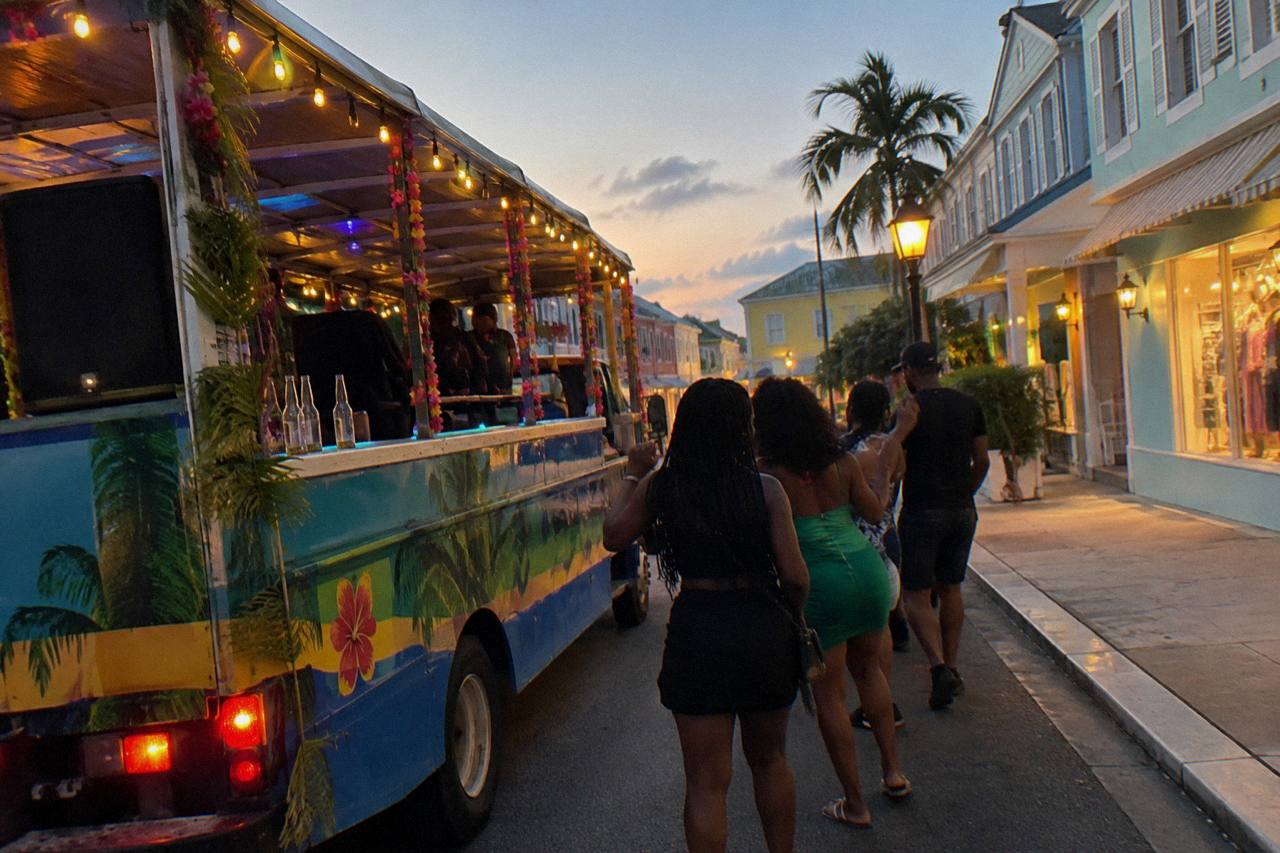
Because the city spent the Prohibition era as one of America's main liquor supply points, with Bay Street warehouses holding an estimated 60,000 cases of whisky and gin at peak and the street nicknamed Booze Avenue, and that trade left a rum infrastructure and identity that outlasted the law that created it. The modern cocktail scene, from distillery taverns to party buses, is the direct descendant of that decade.
When the United States went dry in 1920, Nassau went busy, and rum runners like Bill McCoy, the original Real McCoy, ran liquor out of Bahamian anchorages until the Coast Guard caught him in 1923. The distillery that anchors today's cocktail classes sits on a 1789 estate that later appeared in a James Bond film, and the port's own marketing leans on the rum-running past when it promotes Bahamian rum and rum cakes to arriving passengers.
This is also why mixology classes here teach with a straight face. The drinks carry genuine local lineage: the punch ratio travels the whole Caribbean, but the Goombay Smash is Bahamian to the bone, named for a Bahamian rhythm and born at a Bahamian family bar. A 45-minute class at John Watling's quietly connects you to all of it. For readers building a whole trip around the spirit rather than one serve, our rundown of the best rum in the Bahamas is the next stop, and the homepage of Nassau Rum Tours carries the full tour comparison.
Common Questions About Bahamian Rum Punch And Goombay Smash
What Is Bahamian Rum Punch Made Of?
Bahamian rum punch follows the Caribbean ratio of one part sour, two parts sweet, three parts strong and four parts weak, built on Bahamian rum and citrus and finished with freshly grated nutmeg. The weak element is water, ice or a soft juice such as pineapple.
Where Did The Goombay Smash Come From?
It was created in the 1960s by Emily Cooper, Miss Emily, at her Blue Bee Bar on Green Turtle Cay in the Abacos. The exact recipe remains a family secret held by her granddaughter, with coconut rum and pineapple juice the confirmed elements.
Can I Learn To Make These Cocktails In Nassau?
Yes. John Watling's mixology class runs 45 minutes from $80 per person and lists three crafted cocktails, and the distillery sells it as two listings with the same format. A private speakeasy option downtown starts from $35 per person.
Which Drink Should I Order, Rum Punch Or Goombay Smash?
Order rum punch for a reliable, rum-forward serve governed by a published ratio, and a Goombay Smash for the sweeter pineapple and coconut route with a story attached. Quality varies more with the Smash because the original recipe is secret.
Is There A Drinking Age I Should Know About?
The legal drinking age in the Bahamas is 18. Tours set their own minimums, some listings require 18, and cruise lines commonly apply 21 on board, so check both your tour and your ship.
Can Cruise Passengers Reach These Cocktail Experiences From The Port?
Yes. John Watling's Distillery is a 10 to 15 minute walk from Prince George Wharf per the distillery's directions page, or about five minutes by taxi for around $8 to $10, so even a 45-minute class fits a short port call comfortably.