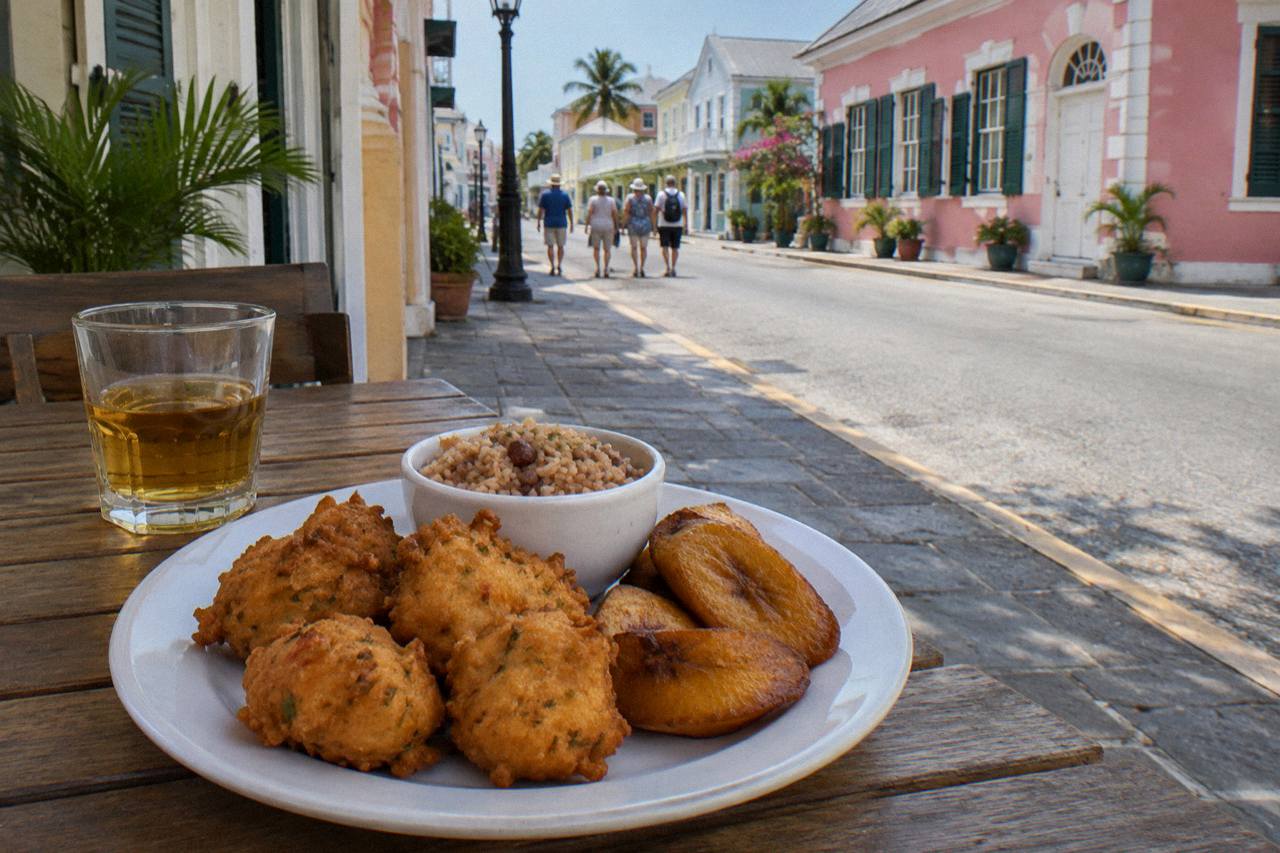
What Is The Best Food To Eat In Nassau?
Conch in every form, rum cake, johnny cake, sky juice and Goombay Smash: the dishes and drinks that define eating in Nassau, and the food tours that include tastings.
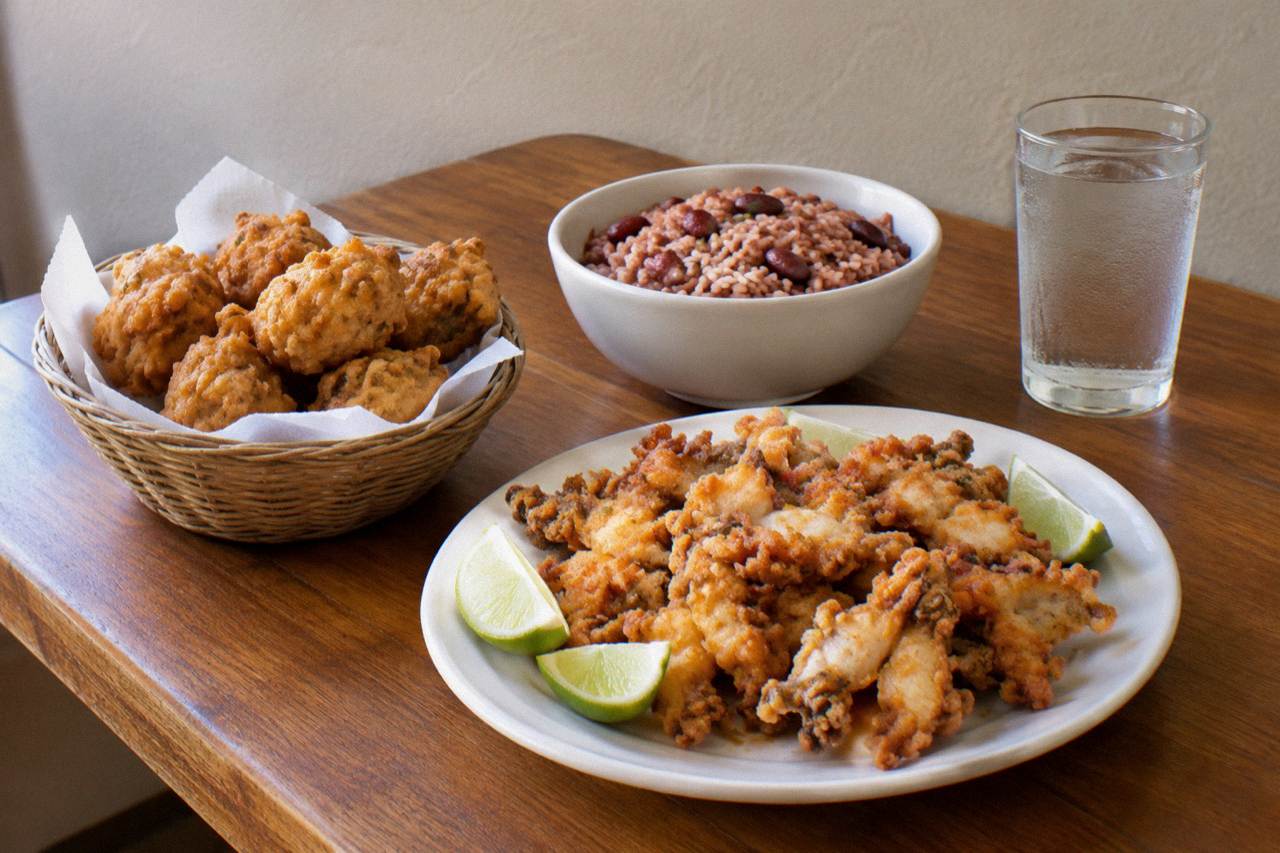
The short list, by consensus of Bahamian food tradition, is conch in several forms (salad, cracked and fritters), fried or steamed fresh snapper, peas and rice, johnny cake, macaroni and cheese baked Bahamian-style, guava duff for dessert, and rum cake with a locally made rum. To drink: Kalik or Sands beer, sky juice, and a Goombay Smash or rum punch.
That list is not a tourist board invention. Conch has been the anchor protein of Bahamian home cooking for generations, and the other dishes rotate around it: peas and rice as the base, johnny cake as the bread on the side, guava duff as the celebration dessert. Rum cake, a bundt-style cake soaked in Ole Nassau rum, is the island's classic souvenir, and the Bahamas Rum Cake Factory has held the title of Official Rum Cake of The Bahamas since 2014, per its own site.
The efficient way to taste a large share of that list in one afternoon is a tour that builds food into the route. The most reviewed food-and-rum tour in Nassau is the Rum Tasting and Food Walking Tour, 4.9 from 1,180 reviews, from $98 per person, with five rum tastings, three cocktails, conch fritters, locally infused appetizers and rum cake across three hours. If you would rather ride than walk, the Nassau Land Tour With Local Food Rum Tasting, 4.3 from 18 reviews, from $90, pairs rum shots with samples of local food and rum cake. Travelers who want to cook the food themselves can book the Rum Cocktail and Conch Fritter Class, from $90, which includes an eight-rum tasting and a hands-on fritter lesson.
A note on one dish before the rest: conch. In late October 2026 the Bahamas Agricultural Health and Food Safety Authority opened an investigation into suspected conch contamination and advised, during that investigation, against raw conch, recommending conch be heated thoroughly, to 100 degrees Celsius for more than ten minutes. Cracked conch, fritters and stewed conch are cooked. Conch salad, the citrus-cured raw preparation, is the one to ask about on the day. The advisory is active as this is written; check current guidance before ordering anything raw.
Where each dish is best eaten, and which version to order, is the rest of this article, from the fish fry shacks at Arawak Cay to the distillery tavern where the rum side of the meal comes from.
Where Do Locals Actually Eat In Nassau?
Arawak Cay, the strip of seafood shacks on West Bay Street locally called the Fish Fry, is the default answer. It is a cluster of independent vendors serving conch salad, cracked conch, fried snapper and sides, busiest in the evenings and on Sundays, with no entry fee, and each shack handles its own kitchen and its own prices.
Arawak Cay itself is artificial ground: the land was created in 1969 from sand dredged during Nassau Harbour work, and the Bahamian tourism authority now lists it as the place for conch salad, cracked conch, conch fritters, fried fish and snapper, with sides of peas and rice and johnny cake. Sky Juice, the gin, coconut water and sweetened condensed milk drink topped with nutmeg, is commonly available there too. Because every vendor is independent, one plate can differ a lot from the next, which is exactly why locals have strong shack-by-shack opinions. Ask where the conch was cracked, and watch for it being knocked fresh at a shack's door, which is the traditional signal.
For cruise visitors the logistics are simple but worth planning. Arawak Cay sits west of the port area, a walkable but warm distance or a short taxi ride on the government-regulated zone fares posted at the port taxi stand. A food tour solves the distance question entirely: the Rum Tasting and Food Walking Tour starts at John Watling's Distillery and covers the tasting trail on foot, while hotel-pickup options such as the Food and Rum Tour, from $160 per person, collect you in an air-conditioned vehicle and include snacks and drinks in the listed price.
Wondering Whether A Tour Beats Going Alone?
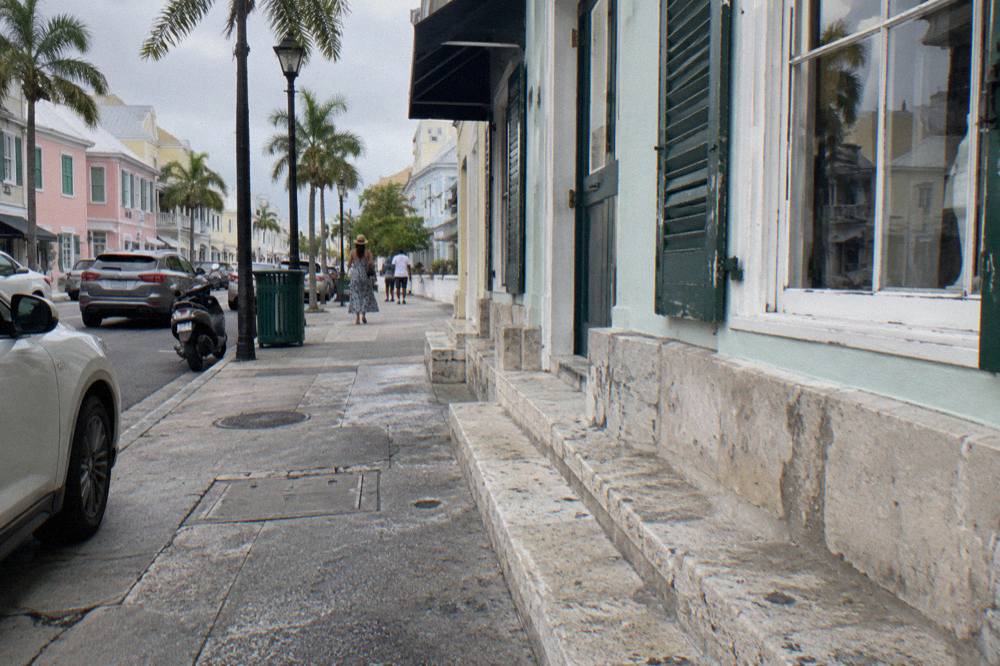
Eating your way through Nassau independently means choosing shacks blind and walking between them in the heat. A guided tasting walk removes both problems, and every rum and food tour here carries free cancellation, so you can hold a slot early and adjust once your ship's schedule is firm.
Which Local Dishes Should You Try First?
Order conch fritters first, because they are the safest introduction to conch and appear on nearly every menu; then cracked conch with peas and rice; then a serving of souse, the Bahamian lime-and-pepper broth, and a wedge of johnny cake. Save guava duff, the steamed guava dough pudding served with a sweet butter rum sauce, for a sit-down meal.
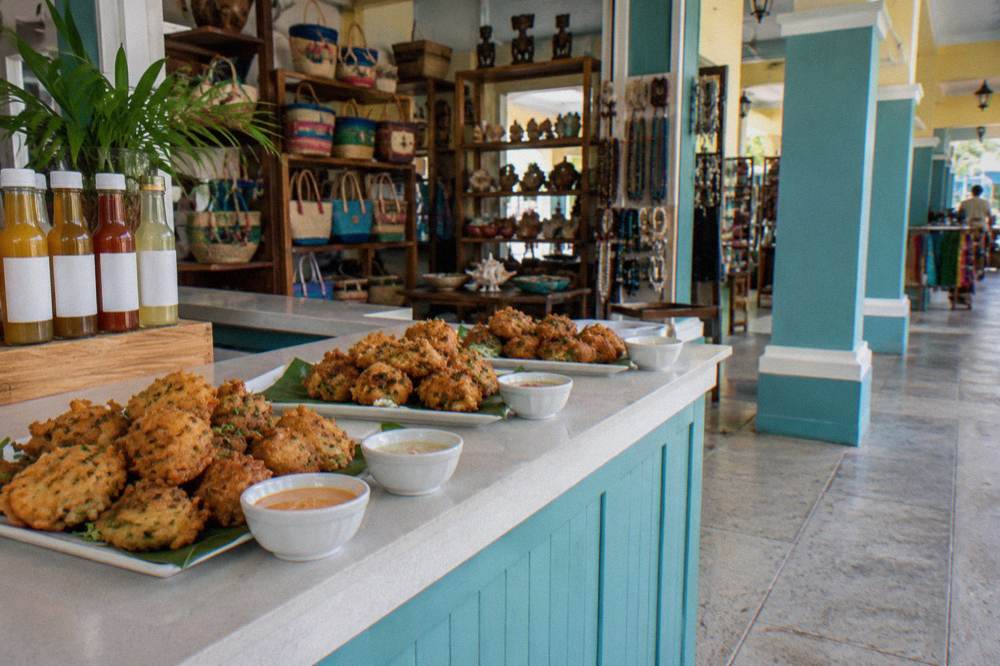
Fritters are deep-fried balls of chopped conch in a seasoned batter, and they are the item Nassau food tours most reliably include, from the walking tour's tasting list to the dedicated fritter-making class. Cracked conch is conch tenderized and fried like a cutlet, served with peas and rice. Conch salad is the raw one: diced conch marinated in lime juice with tomato, onion and hot pepper. It is vivid and famous, but it is the preparation the October 2026 food-safety advisory singled out, so confirm the advisory status before ordering it. Steamed conch in a tomato broth is the cooked alternative.
Around the conch sits the supporting cast. Bahamian macaroni and cheese is baked firm and cut in squares, nothing like the saucy version most visitors grew up with. Johnny cake is a slightly sweet fried or baked dough served alongside savory dishes rather than as dessert. Stewed fish with grits is the classic Bahamian breakfast if you are ashore early. Arawak Cay vendors serve all of these, and the official bahamas.com fish fry page lists the full spread: conch salad, cracked conch, fried snapper and sides at Arawak Cay.
| Dish | What it is | Cooked or raw | Where to order it |
|---|---|---|---|
| Conch fritters | Chopped conch in seasoned batter, fried | Cooked | Fish fry shacks; included on the walking tour and taught in the fritter class |
| Cracked conch | Tenderized, breaded and fried conch cutlet | Cooked | Arawak Cay, sit-down Bahamian restaurants |
| Conch salad | Raw conch diced with lime, tomato, onion, pepper | Raw, citrus-cured | Arawak Cay; check the current BAHFSA advisory first |
| Steamed conch | Conch simmered in tomato broth | Cooked | Fish fry shacks and home kitchens |
| Peas and rice | Pigeon peas cooked with rice and salt pork | Cooked | Standard side everywhere |
| Johnny cake | Slightly sweet fried or baked dough | Cooked | Side dish at most Bahamian counters |
| Guava duff | Steamed guava pudding with buttered rum sauce | Cooked | Full-menu Bahamian restaurants |
If trying all of that feels like a lot of independent ordering, the Nassau Land Tour With Local Food Rum Tasting, 4.3 from 18 reviews and from $90 per person for 2.5 hours, lists samples of local food, rum cake samples and rum shots among its inclusions, which covers most of the fried and sweet items in one seated pass. Its meeting point is stated as Nassau itself, so check the listing for the exact start spot before booking.
What Is Bahamian Rum Cake And Why Is It Everywhere?
Rum cake is a bundt-style cake soaked in locally produced Ole Nassau rum, and it is everywhere because it travels well, keeps for weeks and is the island's default gift and souvenir. The Bahamas Rum Cake Factory at 602 East Bay Street has been recognized as the Official Rum Cake of The Bahamas since 2014, and its own FAQ notes free samples are available at the bakery only, not through resellers.
That last detail is the practical one. Free tasting happens at the bakery counter, and the factory's stated hours are Monday through Saturday 7:30am to 4:00pm and Sunday 8:00am to 2:00pm. Several island tours stop here deliberately: the Nassau City Highlights with Cave and Rum Tasting listing, from $90 for 4.5 hours, includes a rum cake tasting at the factory among five tasting stops, and the Historic ATV Buggy Tour, from $150, lists rum cake samples plus tea samples among its stops. The factory's own page answers the common questions, and its FAQ is worth a read before a dedicated trip: the Bahamas Rum Cake Factory's FAQ on flavors, shelf life and samples.
Rum cake also closes the loop on the dessert course. Guava duff is the historic Bahamian pudding, but rum cake is the one engineered to survive a suitcase, which is why it, and not the duff, fills the shelves near the cruise port. The featured Rum Tasting and Food Walking Tour lists rum cake among its included snacks, alongside the conch fritters and infused appetizers.
What Should You Drink With Bahamian Food?
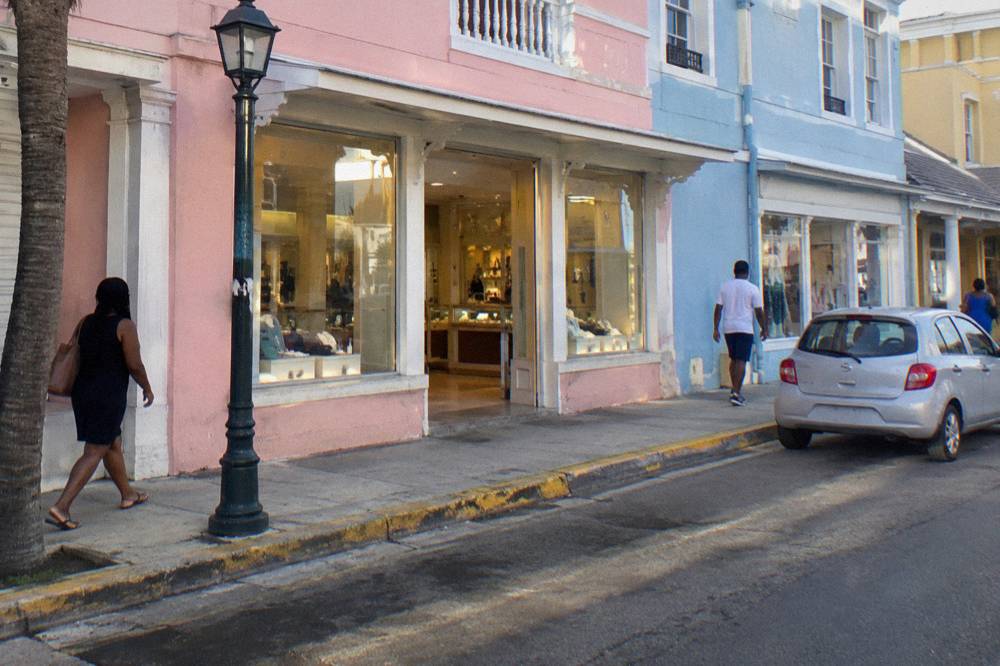
Drink Kalik first: it is the Bahamian-brewed lager, launched in 1988 and brewed by Commonwealth Brewery in Nassau, and it is the default pairing for fried seafood. Then a Sky Juice with conch, and a Goombay Smash or a rum punch once the food is done. All four appear across the island, and the rum drinks are the ones the distillery and the tours go deepest on.
The beer story is a two-brand tale. Kalik, the best-selling beer in the Bahamas, comes in Kalik Gold and Kalik Light variants and pairs with everything fried. Sands, from the fully Bahamian-owned Bahamian Brewery and Beverage Company, launched on December 15, 2007, and is the patriotic counter-order, with a light version and radlers in the range. Either is correct with cracked conch; asking for both and comparing is better.
The cocktail side starts with the Goombay Smash, which Food and Wine traces to the 1960s at Miss Emily's Blue Bee Bar on Green Turtle Cay, created by Emily Cooper, who reportedly never tasted it herself and guarded the exact recipe; her granddaughter keeps the secret today, with coconut rum and pineapple juice among the confirmed elements. A version is served at Curly's at Arawak Cay in Nassau. Rum punch follows the classic Caribbean ratio of one part sour, two parts sweet, three parts strong and four parts weak, with nutmeg on top. The distillery-side way into both is the John Watling's Rum Academy on the Buena Vista Estate, which the distillery's visit page lists as a 45-minute guided tasting and a mixology class, each $80 per person, booked by time slot, with the estate itself free to walk into daily from 10am to 6pm: John Watling's visit page with paid experience prices.
| Drink | What it is | Classic pairing |
|---|---|---|
| Kalik | Bahamian-brewed lager from Commonwealth Brewery, launched 1988 | Cracked conch, fried snapper |
| Sands | Beer from the Bahamian-owned Bahamian Brewery, launched 2007 | Any fish fry platter |
| Sky Juice | Gin, coconut water, sweetened condensed milk, nutmeg | Conch salad at the Fish Fry |
| Goombay Smash | Coconut rum and pineapple cocktail, created on Green Turtle Cay in the 1960s | End of meal, or afternoon |
| Rum punch | 1 sour, 2 sweet, 3 strong, 4 weak, nutmeg garnish | Sipping; the reggae tours pour their own version |
One tour format exists almost entirely for that last category: the rum and reggae family. The most reviewed is the Rum Reggae and Rhythms Tour: Dancing and Cocktails, 4.6 from 691 reviews, from $73 for four hours, which the listing describes as the operator's own rum punch, the "sip slow," and reggae on a bus. It is not a food tour, but it is the fullest expression of the rum-punch half of Bahamian food culture. Food-first visitors will get more from the combined-format options compared in the food and rum walking tours guide.
Can You Taste Local Food On A Guided Tour?
Yes, and it is often the cheapest way to sample five dishes in one booking. Tours that include real food start at $75 per person (the City Sight Seeing tour with wine, rum cake and conch fritter samples, 4.6 from 217 reviews), the 3-hour walking tour runs from $98, and the hands-on fritter class at $90 teaches you to make the food rather than just eat it.
The decision is really about format: walk, ride or cook. Walking covers the distillery-to-downtown corridor and pairs food with history. Riding covers more ground, including the rum cake factory and beach stops, but spends less time per stop. Cooking classes end with you owning the recipe, which for many visitors is the better souvenir. The table below shows the food-carrying tours side by side.
| Tour | Rating and reviews | Price | Duration | Food and drink included per the listing |
|---|---|---|---|---|
| Rum Tasting and Food Walking Tour | 4.9 from 1,180 reviews | from $98 per person | 3 hours | 5 rum tastings, 3 cocktails, conch fritters, infused appetizers, rum cake |
| City Sight Seeing with Wine, Rum Cake and Conch Fritter Samples | 4.6 from 217 reviews | from $75 per person | 2 to 3 hours | Wine, chocolate, rum cake and conch fritter sampling, hotel pickup listed |
| Rum Cocktail and Conch Fritter Class, 8-Rum Tasting | 5.0 from 5 reviews | from $90 per person | 2 hours | 8-rum tasting, 2 cocktails made and tasted, full fritter-making class |
| Nassau Land Tour With Local Food Rum Tasting | 4.3 from 18 reviews | from $90 per person | 2.5 hours | Local food samples, rum cake samples, rum shots, soft drinks |
| Nassau Pirate Rum Adventure | 5 from 21 reviews | from $110 per person | 3 hours | Drinks stops at 4 landmarks; lunch not included but purchasable |
The site's John Watling's experiences comparison breaks down the distillery-side options the same way. The pirate option is the wildcard: a 5.0 rating from 21 reviews and hotel pickup, built around four drinking landmarks with pirate history, closer to a bar crawl with stories than a meal. For a fuller read on that format, see the pirate rum adventure guide.
For travelers whose real interest is the fritter pan rather than the tasting glass, the cocktail and fritter class is the one that changes what you can cook at home.
What Should Food-Lovers Know Before Eating In Nassau?
Three practical points: US dollars are accepted everywhere at par with the Bahamian dollar, so no exchange is needed; tipping runs 15 to 20 percent at restaurants and many bills add a service charge automatically, so read the bill before adding more; and the raw-conch advisory from the food-safety authority is the one piece of guidance to check on the day you eat.
Money is the easy part. The Bahamian dollar is pegged one to one with the US dollar and both circulate freely, which removes the mental math from every shack order. Budget-wise, a self-guided eating day at Arawak Cay costs whatever the plates cost at the counter, while the tour route runs from the $75 sightseeing tour with samples up to $160 for the Food and Rum Tour with hotel pickup, with tastings included in every price. Tipping culture follows US norms, and tour guides are customarily tipped per person at the end, in cash.
The conch advisory deserves repeating because conch is the headline food. The Bahamas Agricultural Health and Food Safety Authority's October 2026 investigation recommends well-cooked conch heated to 100 degrees Celsius for more than ten minutes, which describes fritters, cracked conch and stewed conch but not the citrus-cured salad. Cooked preparations are unaffected. Ask the vendor or your guide about the current status of the advisory, and treat any raw order as a same-day decision rather than something planned from home.
Finally, timing. The fish fry is busiest evenings and Sundays, the rum cake factory keeps weekday-morning hours that suit a cruise morning, and the distillery pours from 10am. The featured food walk starts at John Watling's and works down into town, and the fuller rundown is on the featured tour's page on this site. Whatever you book, every tour above carries free cancellation, so an early reservation costs you nothing but a held slot.
Common Questions About Food In Nassau
What Is The Best Food To Eat In Nassau?
Conch fritters, cracked conch with peas and rice, fresh fried snapper, johnny cake, guava duff and rum cake, with Kalik or Sands beer and a rum punch or Goombay Smash alongside. A food-and-rum walking tour from $98 per person includes tastings of most of that list in three hours.
Where Is The Best Place To Eat Conch In Nassau?
Arawak Cay, the Fish Fry strip on West Bay Street, is the default: independent vendors serving conch salad, cracked conch and fritters, busiest evenings and Sundays. Conch fritters, the cooked preparation, also appear on several tour listings including the rum tasting and food walking tour.
Is Conch Safe To Eat Right Now?
Cooked conch preparations, including fritters, cracked conch and stewed conch, are unaffected by the October 2026 food-safety investigation, which recommended thorough cooking. The advisory singled out raw conch salad; check the current status on the day you order it.
What Is A Goombay Smash?
A Bahamian cocktail traced to Miss Emily's Blue Bee Bar on Green Turtle Cay in the 1960s, built on coconut rum and pineapple juice, with the exact recipe still kept by her family. Versions are served in Nassau, including at Arawak Cay.
Can You Buy Rum Cake Near The Cruise Port?
Yes, and the source is the Bahamas Rum Cake Factory at 602 East Bay Street, open Monday through Saturday mornings and afternoons and Sunday mornings, with free samples at the bakery counter only. Several island tours also include a rum cake tasting stop.
Do Any Nassau Tours Include Meals?
Most food tours include tastings rather than full meals. The walking tour includes conch fritters, appetizers and rum cake; the land tour from $90 lists local food samples; and the fritter-making class from $90 has you cooking the food yourself, with everything eaten in class.